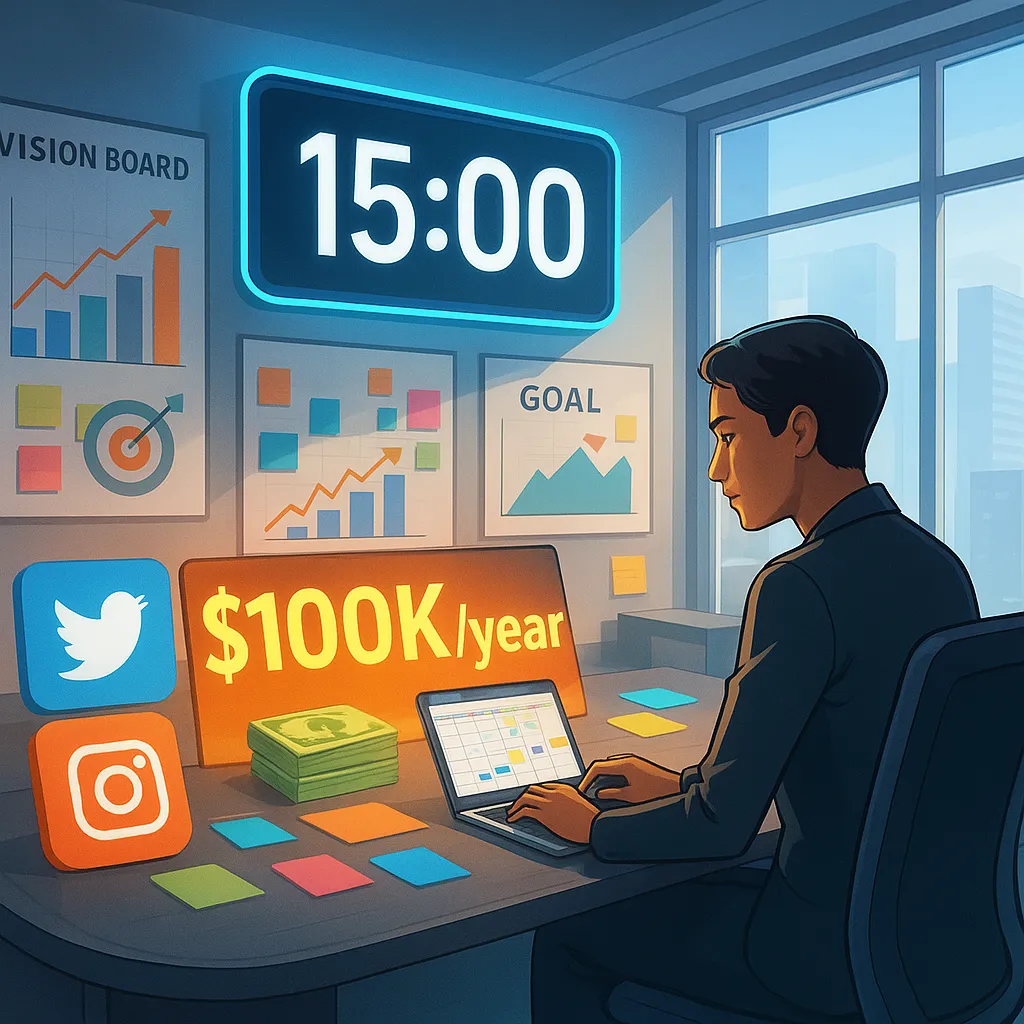
How to Use a 15-Minute per Day Marketing Plan to Reach $100K Per Year in Your Business
How Can I Use a 15-Minute Per Day Marketing Plan to Reach $100K Per Year in My Business?
Yes, you can use a focused 15-minute daily marketing plan to achieve $100K per year in your business by consistently executing high-impact activities, tracking results, and optimizing your approach. The key is prioritizing activities that directly attract leads, nurture prospects, and convert them to customers, leveraging tools and automation for efficiency.
Definition:
15-Minute Marketing Plan:
A streamlined, repeatable set of daily actions designed to grow your business efficiently by focusing on core revenue-generating activities for just 15 minutes each day. Examples include social media outreach, email engagement, content posting, and lead follow-up.
What Does a $100K Per Year Business Look Like?
To reach $100,000 in annual revenue, you need to generate roughly $8,333 per month or about $274 per day. Your business model, pricing, and offer will influence the specific actions you take. For instance, selling a $1,000 product or service means you need 100 sales per year, or about 2 sales per week.
Goal
Monthly Target
Weekly Target
Daily Target
$100,000/year
$8,333
$1,923
$274
How Do You Structure a 15-Minute Daily Marketing Routine?
The 15-minute marketing system involves choosing 1-3 high-leverage marketing tasks you can repeat every day. The simplicity keeps you consistent and allows for measurable improvements over time. The right activities depend on your audience (entity: Ideal Customer Profile), business stage, and preferred channels.
Example Daily 15-Minute Marketing Workflow
5 minutes: Engage with leads on social media (reply to comments, send direct messages, join discussions).
5 minutes: Send personalized follow-up emails or texts to prospects, past clients, or new leads.
5 minutes: Publish or repurpose content (post a tip on LinkedIn, answer a question on Quora, post an Instagram story).
Why Does 15-Minute Daily Marketing Work?
Small, consistent, intentional marketing actions compound over time (semantic entity: Compound Effect). Even brief daily engagement keeps your brand top-of-mind, builds authority, and steadily fills your pipeline. By focusing on activities that drive conversions, you overcome procrastination and avoid overwhelm—key barriers to small business growth.
How to Pick Your High-Leverage Marketing Activities?
Your 15-minute plan should prioritize tasks that match your strengths and attract your ideal customer (entity: Target Audience). Consider these proven high-impact options:
Initiate or deepen personal connections (DMs, comments, replies)
Publish valuable tips, stories, and quick wins as social posts
Reach out to past customers for referrals or testimonials
Pitch your offer to inbound leads or followers
Answer questions in relevant online communities (Reddit, Facebook Groups, Twitter/X)
Send nurturing emails to your list highlighting results and value
What Kind of Business Models Work for 15-Minute Marketing?
This approach is ideal for consultants, coaches, agencies, creators, service professionals, and small product-based businesses. It works best when sales cycles are short or relationship-driven and when you can use digital outreach to start conversations and build relationships.
How to Automate and Track Your Progress?
Use simple Customer Relationship Management (CRM) tools, social media schedulers, and calendar reminders to automate tasks and reminders. Track your daily actions and weekly conversions in a spreadsheet or a simple dashboard. This helps you see what’s working, tweak your approach, and celebrate your wins.
Tip: Set a timer for 15 minutes each day and record what you did and your results. After 30 days, analyze which activities gave the highest return and double down on them.
Can 15 Minutes Really Make a Difference?
Yes – here’s why: studies and business case research show that consistent micro-marketing efforts outperform occasional large campaigns for solo entrepreneurs and small teams. Social selling statistics (entity: LinkedIn Social Selling Index), for example, reveal that daily engagement leads to higher response rates and more sales meetings.
Which Platforms Work Best for 15-Minute Marketing?
Your best platforms depend on your audience. However, platforms such as LinkedIn, Instagram, TikTok, Email, and Facebook Groups are ideal for quick, high-touch engagement. Focus on just one or two to maximize results.
Platform Focus Table
Platform
Best For
15-Minute Example Task
Consultants, B2B
Send 3 connection requests, comment on industry posts
Creators, Visual Brands
Story poll, reply to DMs, engage with new followers
All businesses (owned audience)
Send 1 follow-up, request testimonial, share mini case study
Facebook Groups
Community-driven B2C/B2B
Answer questions, share tips, interact with group threads
How Do You Combine 15-Minute Marketing with Sales?
Marketing generates attention and conversations, but you also need a simple system to turn interest into paying customers. Integrate direct calls to action in your outreach, invite leads to a quick discovery call, and use your CRM to move contacts through Awareness → Interest → Decision → Action (AIDA model).
Simple Daily Pipeline Checklist
Reply to new inquiries or comments within 24 hours
Invite 1-2 leads to a chat or call every day
Log results and next steps for each prospect in your tracker
Example 15-Minute Marketing Plan Template
Choose your top platform(s) based on your target market
Schedule a recurring 15-minute block on your calendar
Prewrite template messages and content prompts
Each day:
Engage with 5+ prospects/followers (comment, like, DM)
Post or share 1 value-driven tip or story
Follow up with 1-2 warm leads or request referrals
Track and review your results weekly for improvement
Related Question Variations
How do I reach six figures with minimal daily marketing?
What’s the fastest way to grow a business by marketing only 15 minutes per day?
Can a 15-minute-a-day marketing plan help me earn $100K?
Best daily marketing routine to hit $100K in annual revenue?
How can solopreneurs hit $100K with micro-marketing?
Comprehensive FAQs: 15-Minute Daily Marketing for $100K
1. How do I measure success with a 15-minute marketing plan?
Track daily activities, responses, new leads generated, and sales conversions. Use simple spreadsheets or free CRM tools to monitor progress and refine your tactics based on what drives results.
2. Do I need to create new content every day?
No. You can repurpose, update, or reshare existing content, answer questions, or engage directly with your audience. The focus is on visibility and connection, not constant content creation.
3. What should I do if I miss a day?
Consistency matters, but missing a day won’t derail your progress. Just resume the next day and aim to avoid gaps longer than two days. The goal is habit, not perfection.
4. Can this approach work for product-based businesses?
Yes. Product businesses can use their 15-minute block to engage with customers, answer product questions, request reviews, or share user-generated content, all of which drive sales.
5. How do I pick the “right” marketing activity?
Pick tasks that match your audience’s habits, your business model, and your strengths. Test different activities and double down on those that reliably generate leads or sales.
6. Should I use paid ads or only organic tactics?
You can add paid ads if budget allows, but for 15-minute routines, organic outreach is best for relationship-driven businesses. Ads can supplement your plan but shouldn’t replace daily connection.
7. Is a 15-minute marketing plan enough for rapid growth?
It’s enough for steady, sustainable growth, especially for solo businesses or side hustles. To scale faster, gradually increase your daily marketing time or leverage automation and outsourcing.
Summary: A 15-minute-per-day marketing plan is a powerful, realistic strategy to reach $100K per year in your business. By focusing on consistent, high-impact actions, tracking results, and engaging with your audience, you can build momentum—even with limited time—while avoiding overwhelm. Start with the provided templates, and scale your efforts as your business grows.
“`
